

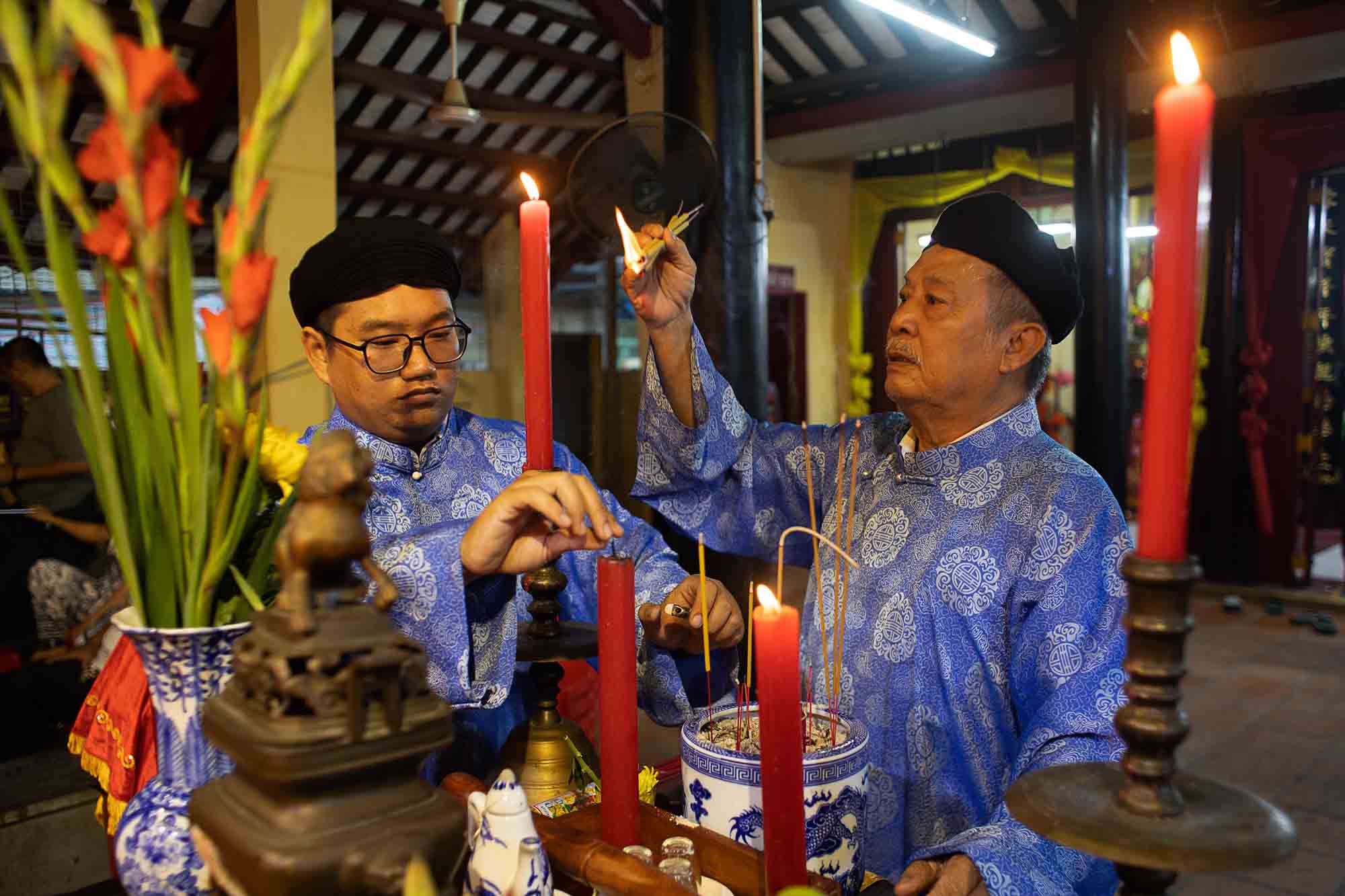
An elderly and his young assitant, who's in charged of the whole activities of Phu Nhuan temple, are burning incenses as a traditional ritual act to start the show. HCMc, Feb 2025.
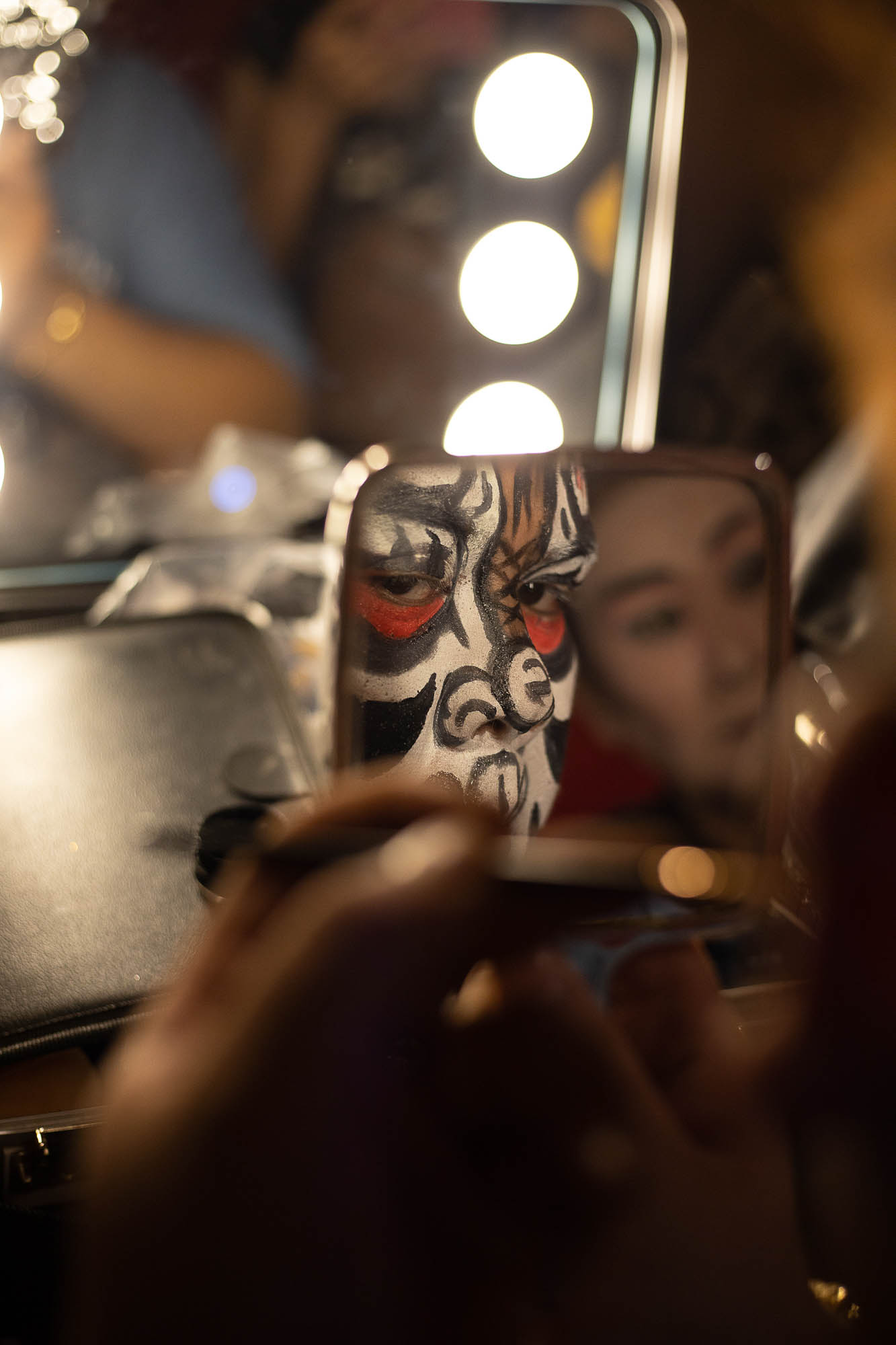
A young actor is doing his own makeup for the show.
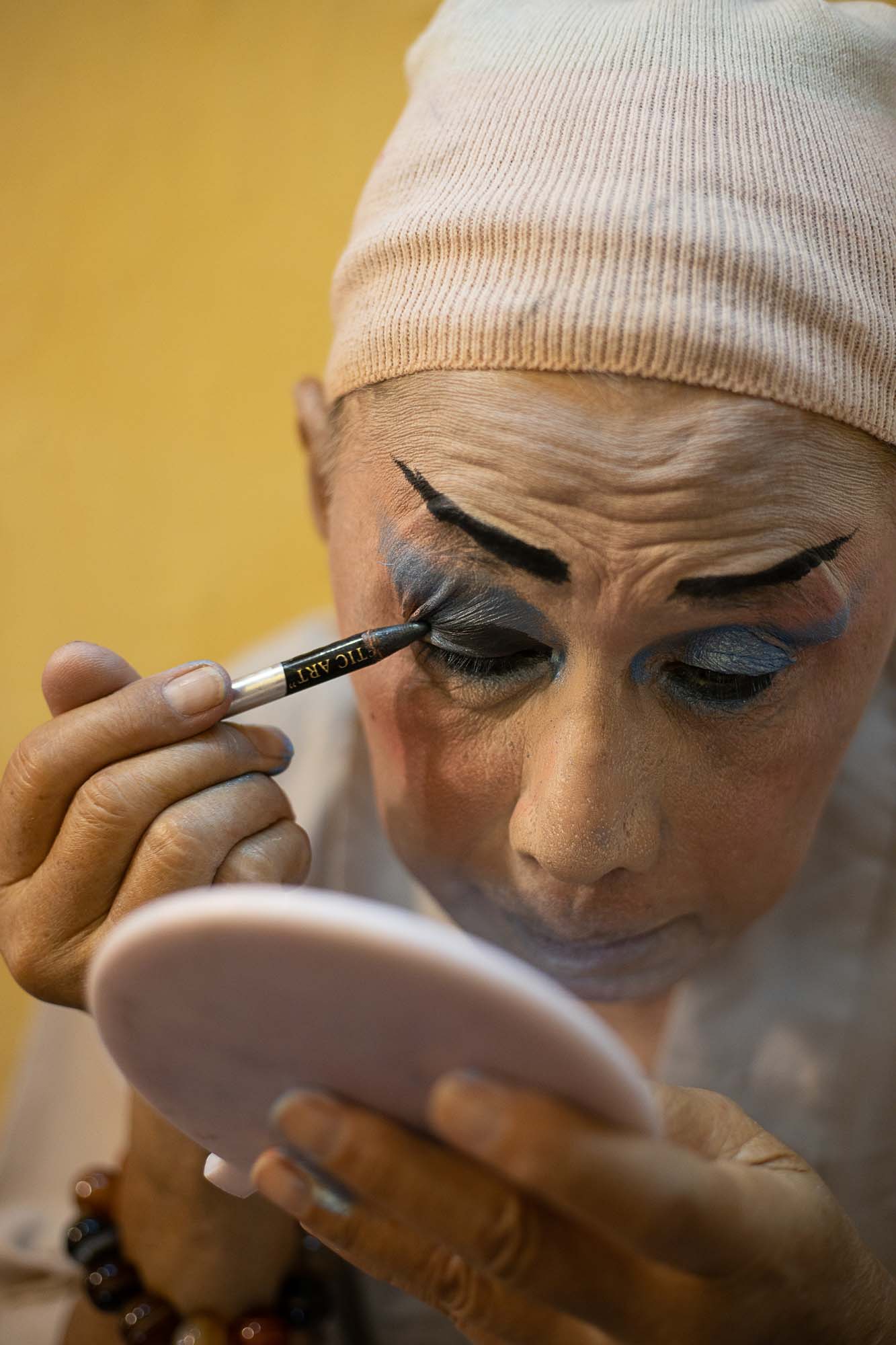
Mr. Doan Canh, aged 75, who's following this perform art nearly 60 years, is making his own makeup at the backstage, preparing for a role of the famous traditional opera "Road to San Hau". HCMc, Feb 2025.
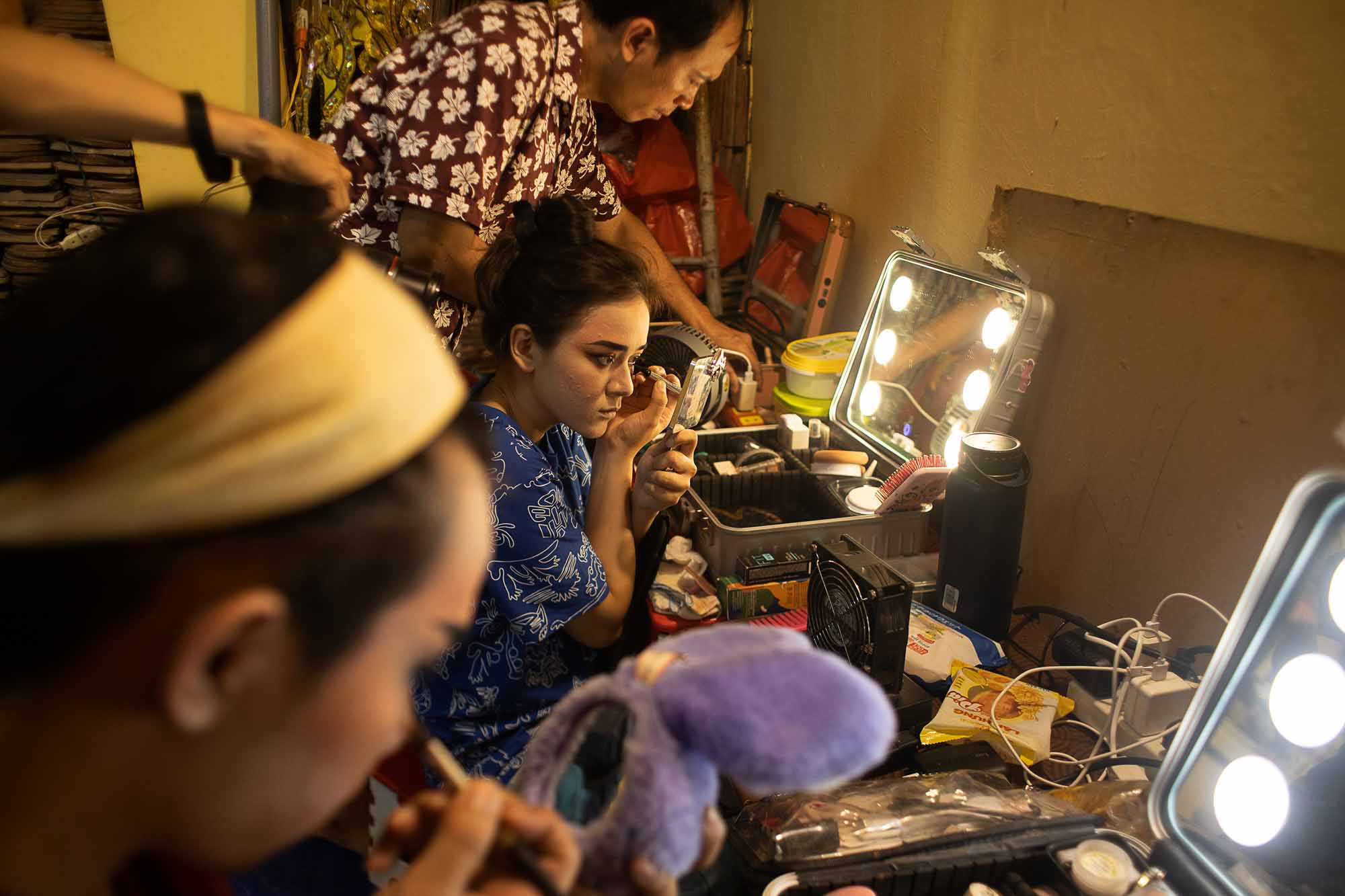
Van Anh, aged 24, niece of Mrs. Ngoc Khanh, is a promising young actress of the troupe. She's considered as one of a near future main character.
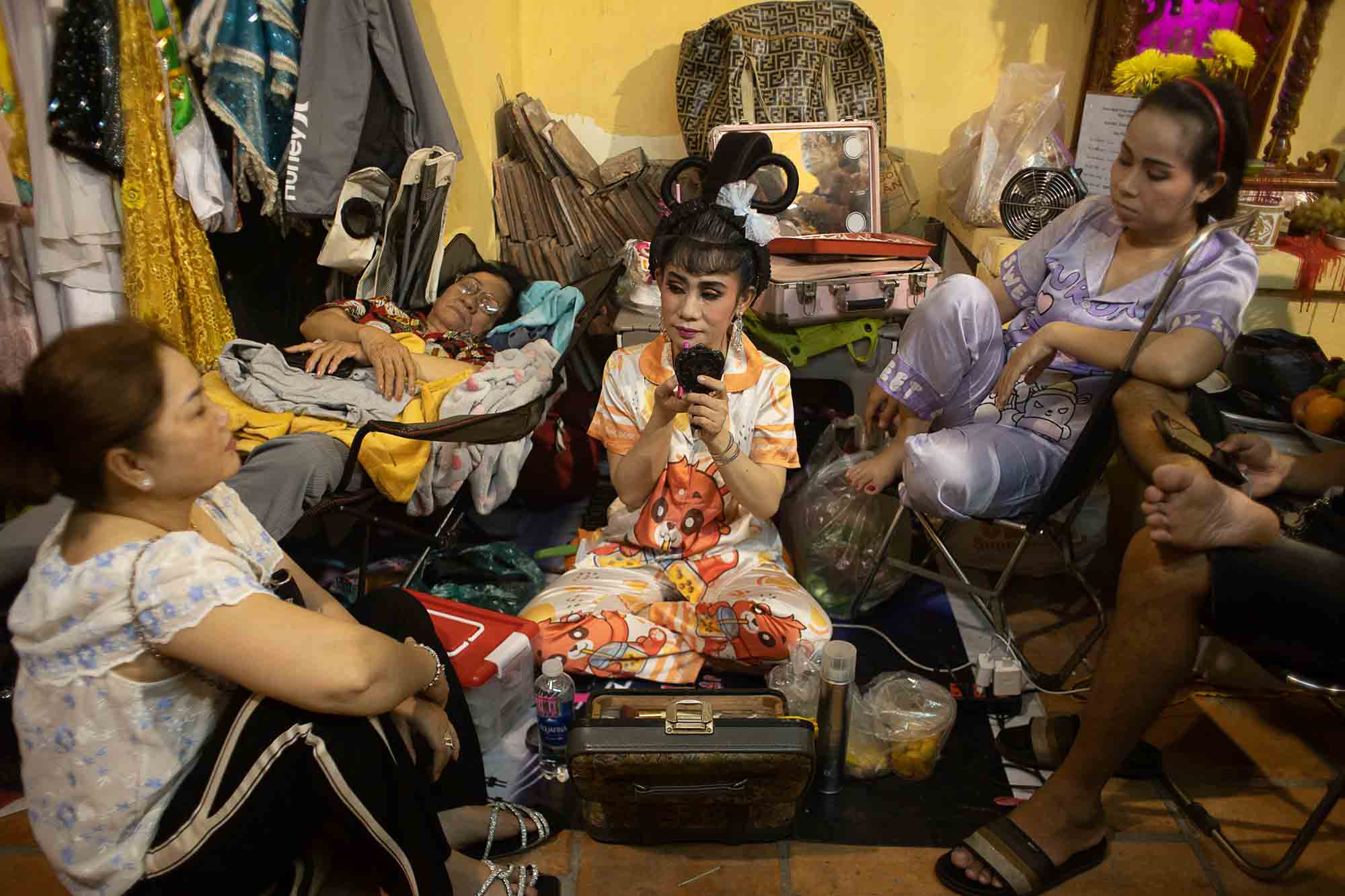
Mrs. Ngoc Khanh, who's sleeping on the hammock while other actress and assistant await to their turn to performs. HCMc, Feb 2025.
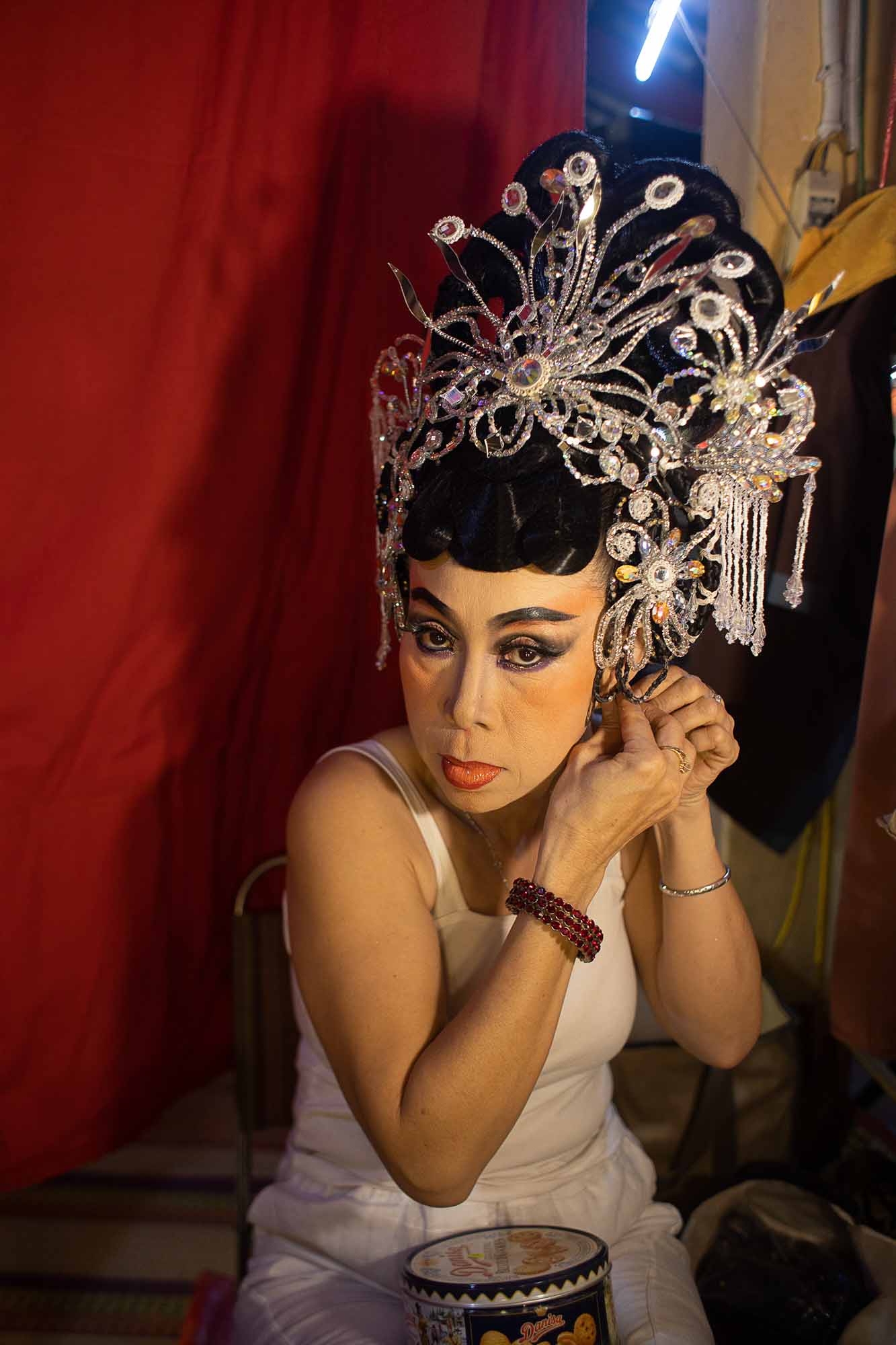
Mrs. Hien, aged 69, an actress with more than 40 years experiences is finalize her facial makeup at the backstage of the opera shown"Road to San Hau". HCMc, Feb 2025.
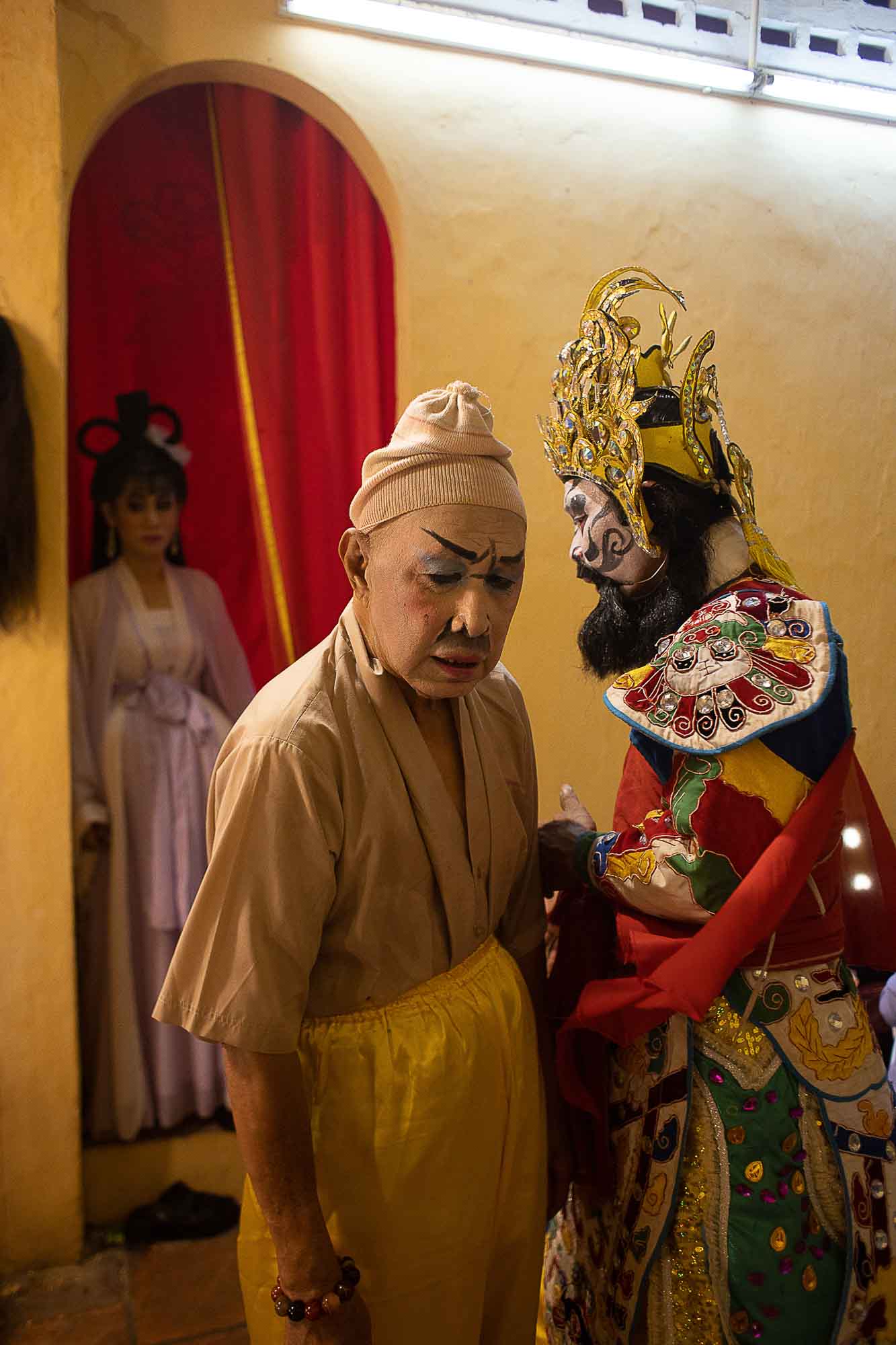
Actors and actress are preparing their costumes and makeup at the backstage to get ready for the show. HCMc, February, 2025.
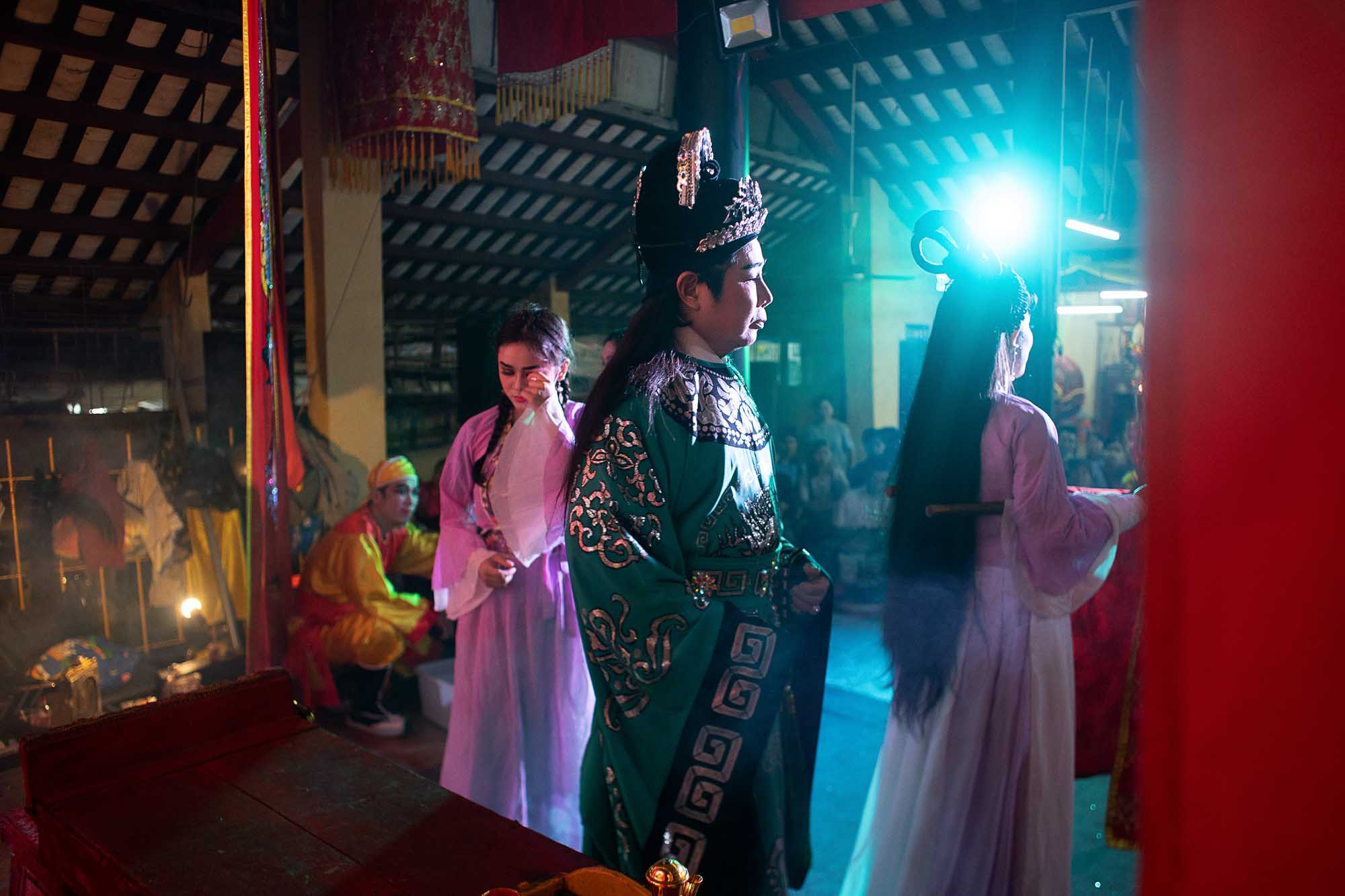
View from the backstage of the opera show while actors and actresss are performing at Phu Nhuan temple. HCMc, Feb 2025.
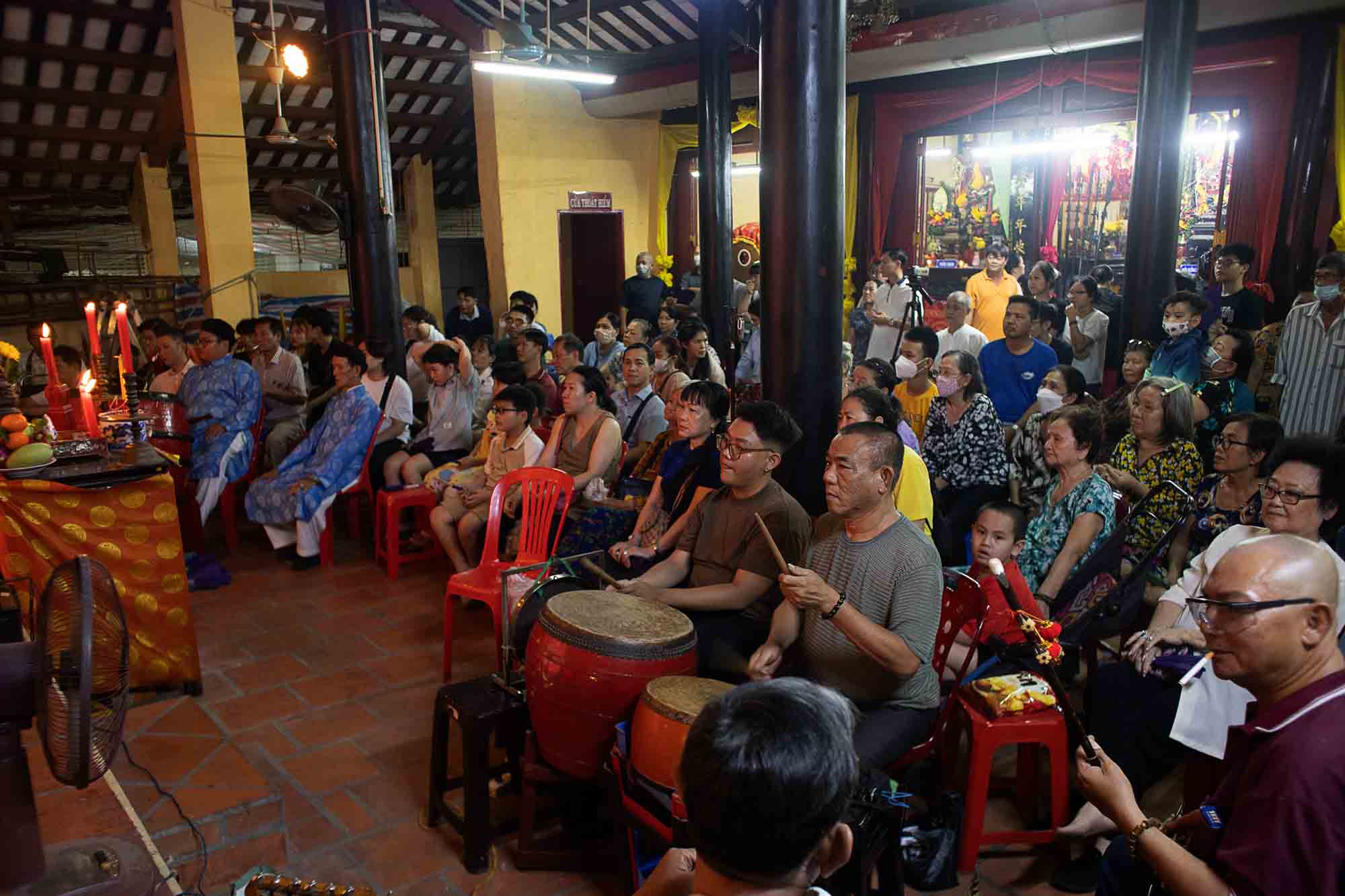
Audiences and musicians are waiting for the start of the opera show "Road to San Hau" at the ground of Phu Nhuan temple, HCMc. February, 2025.
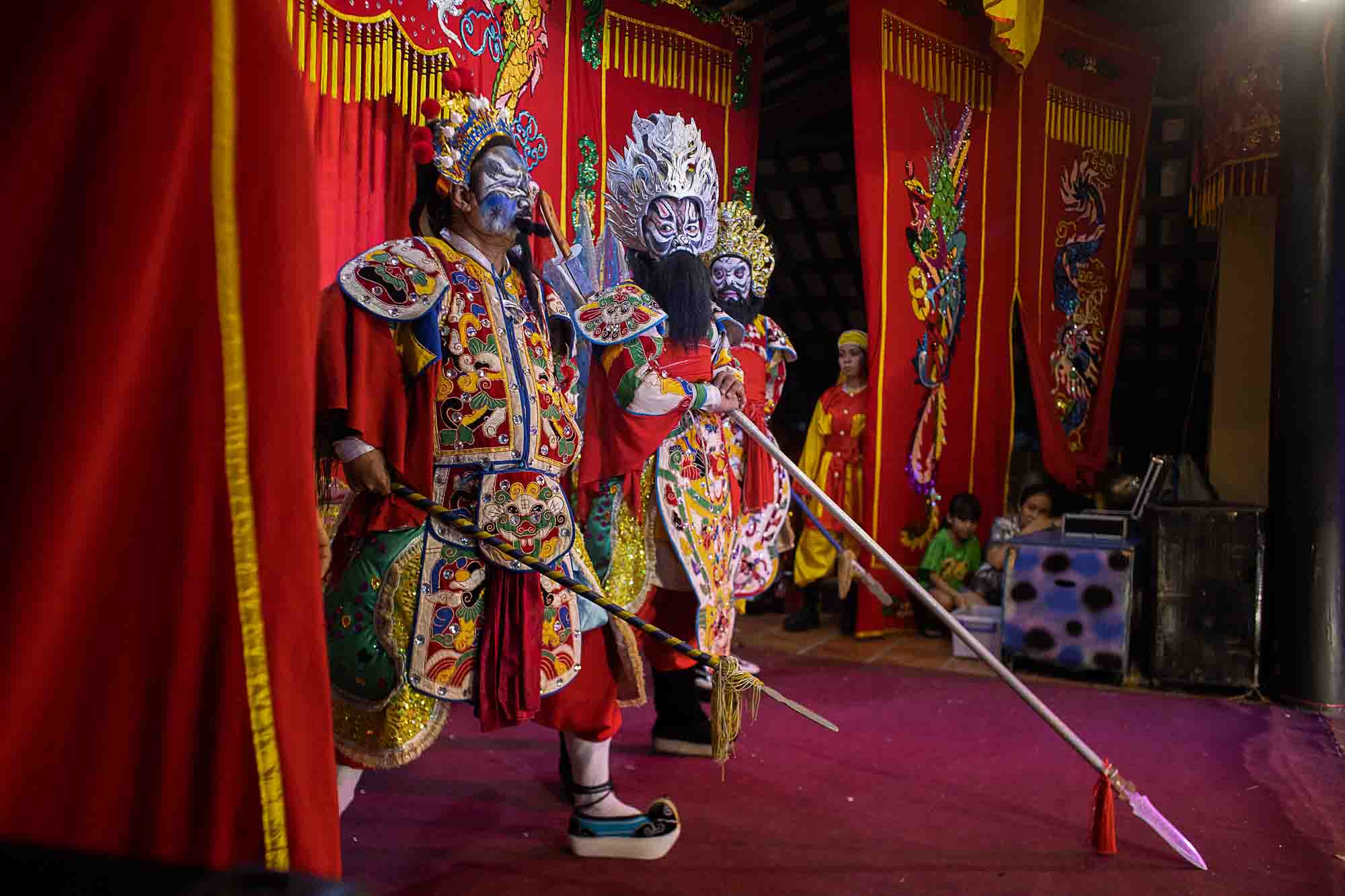
Experienced actors are performing as start of the opera show "Road to San Hau". HCMc, Feb 2025.
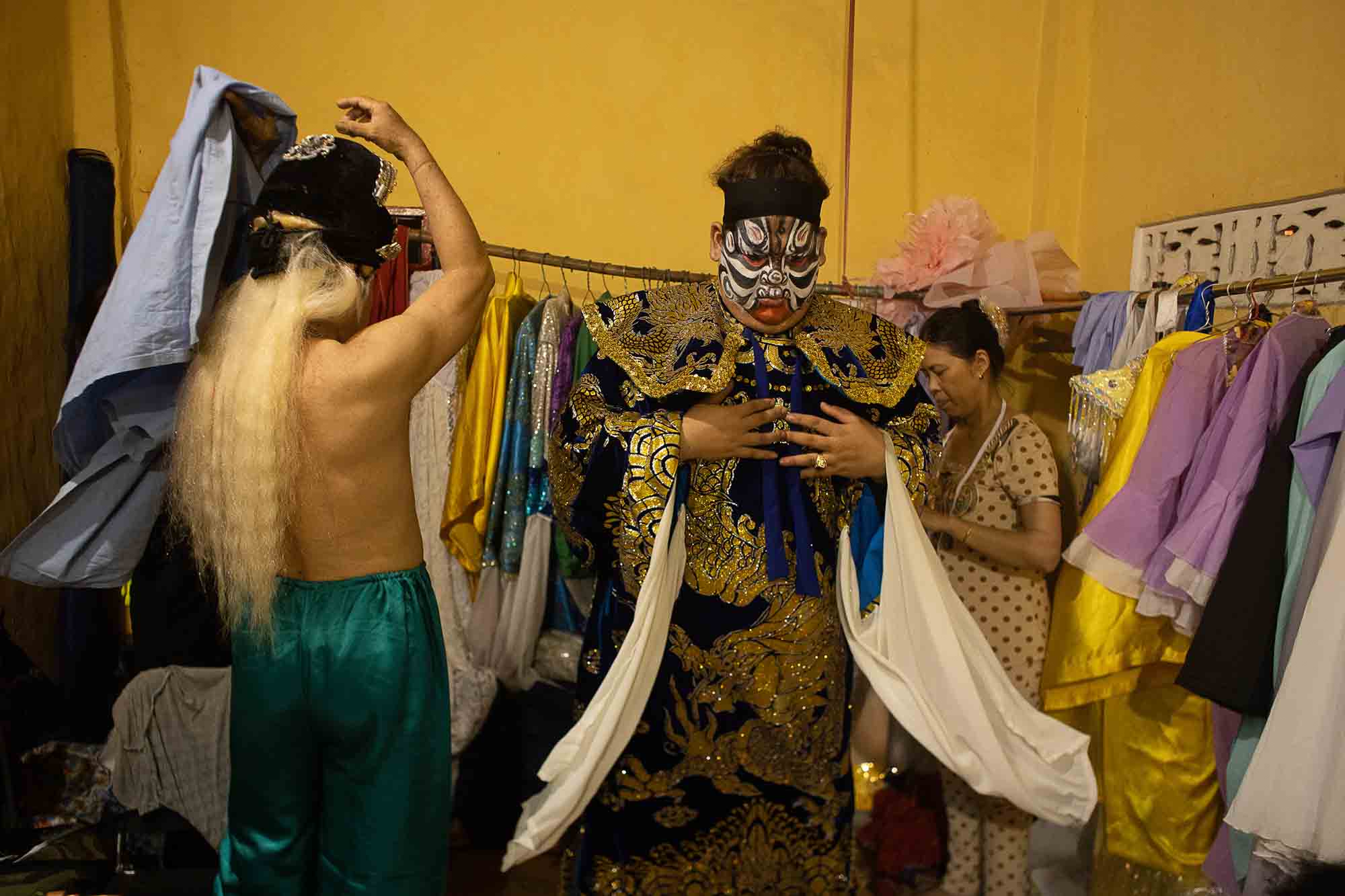
An actor is waiting for his turn to perform and trying to subvocalizes the scrips before the show has starts.