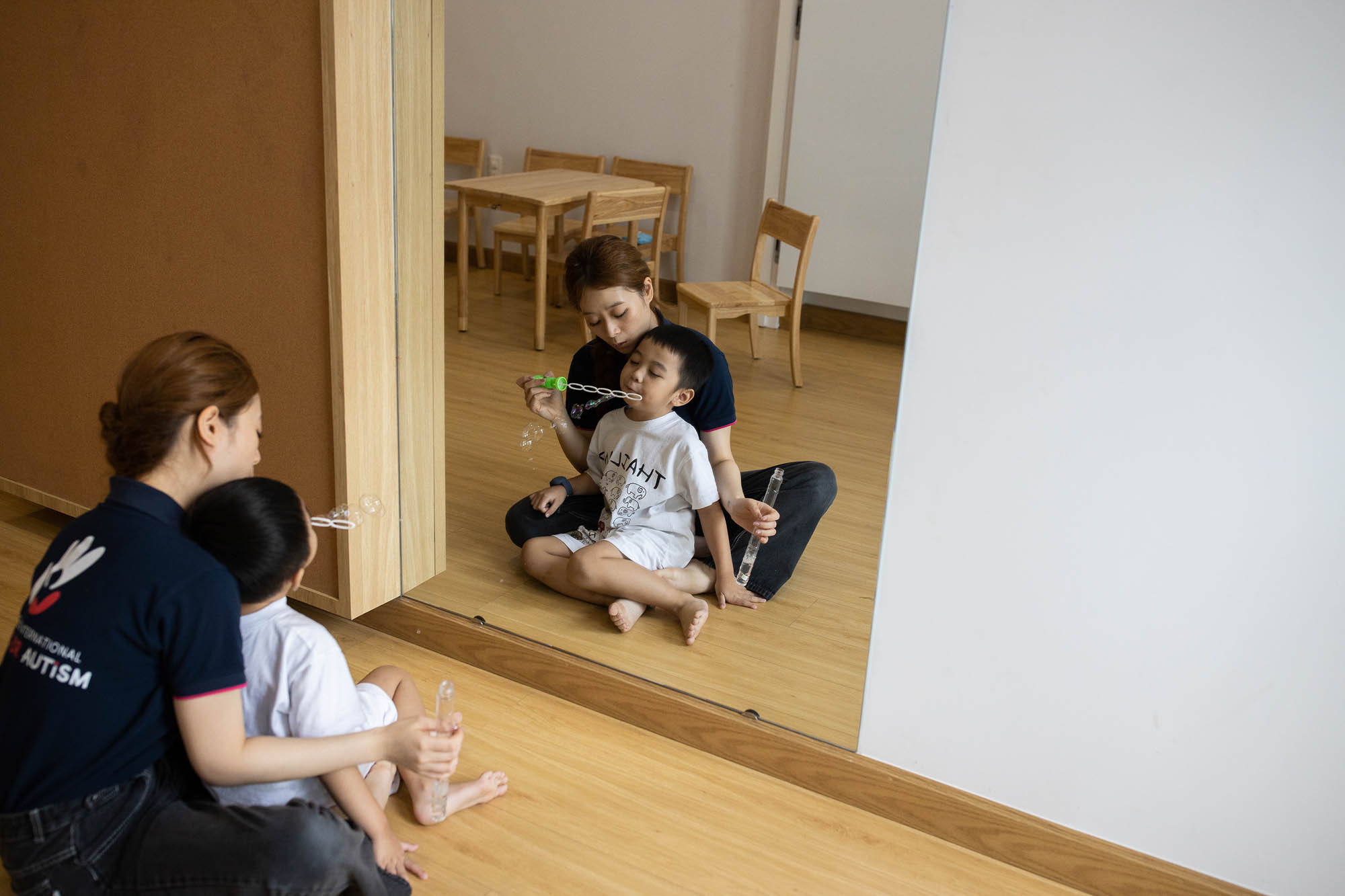
Ian, 6 years old, is being guided by his teacher to play bubbles game during a lesson on interacting with objects.
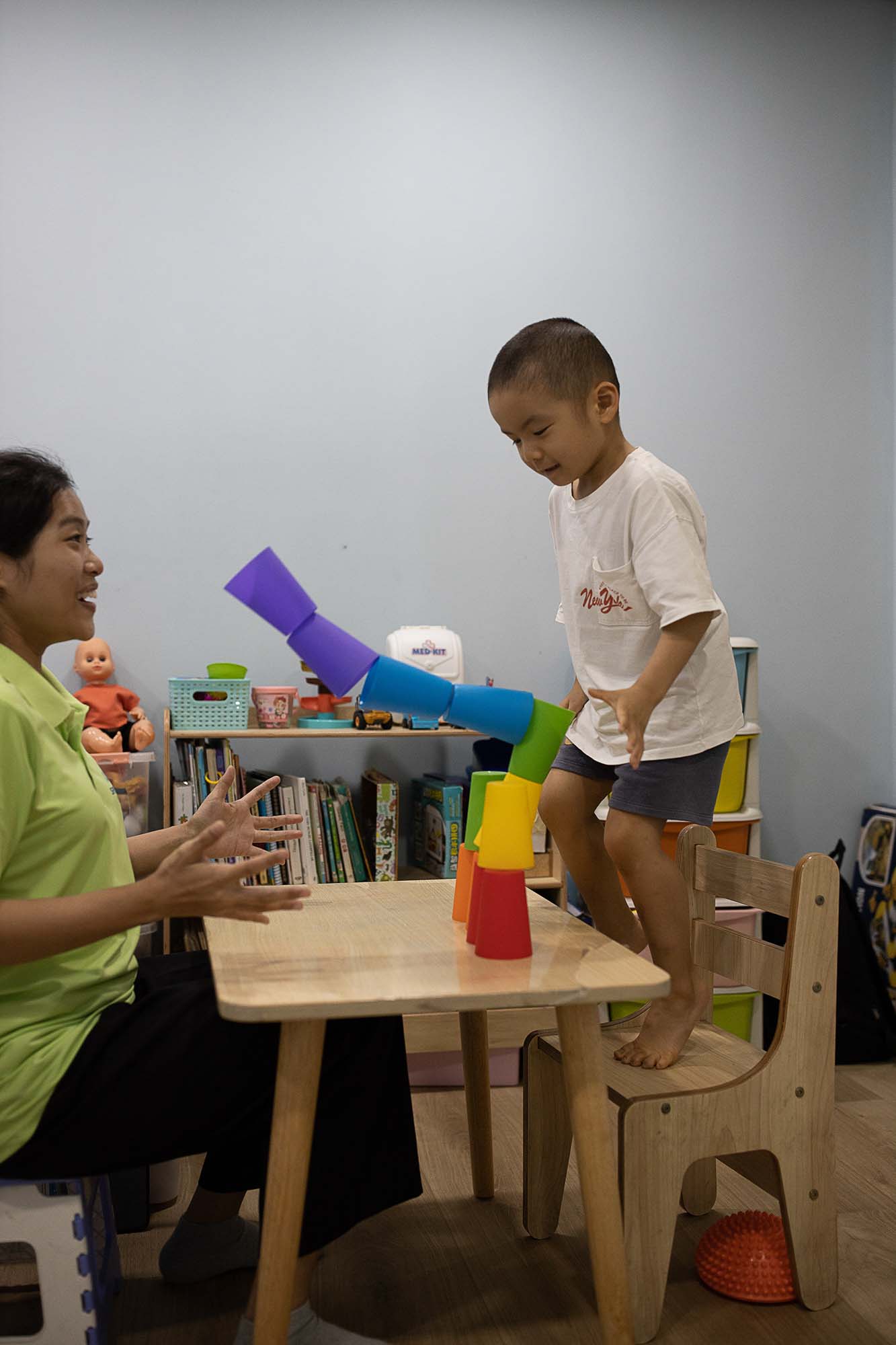
The teacher and her pupil are enjoying themselves during a fun model-building lesson.
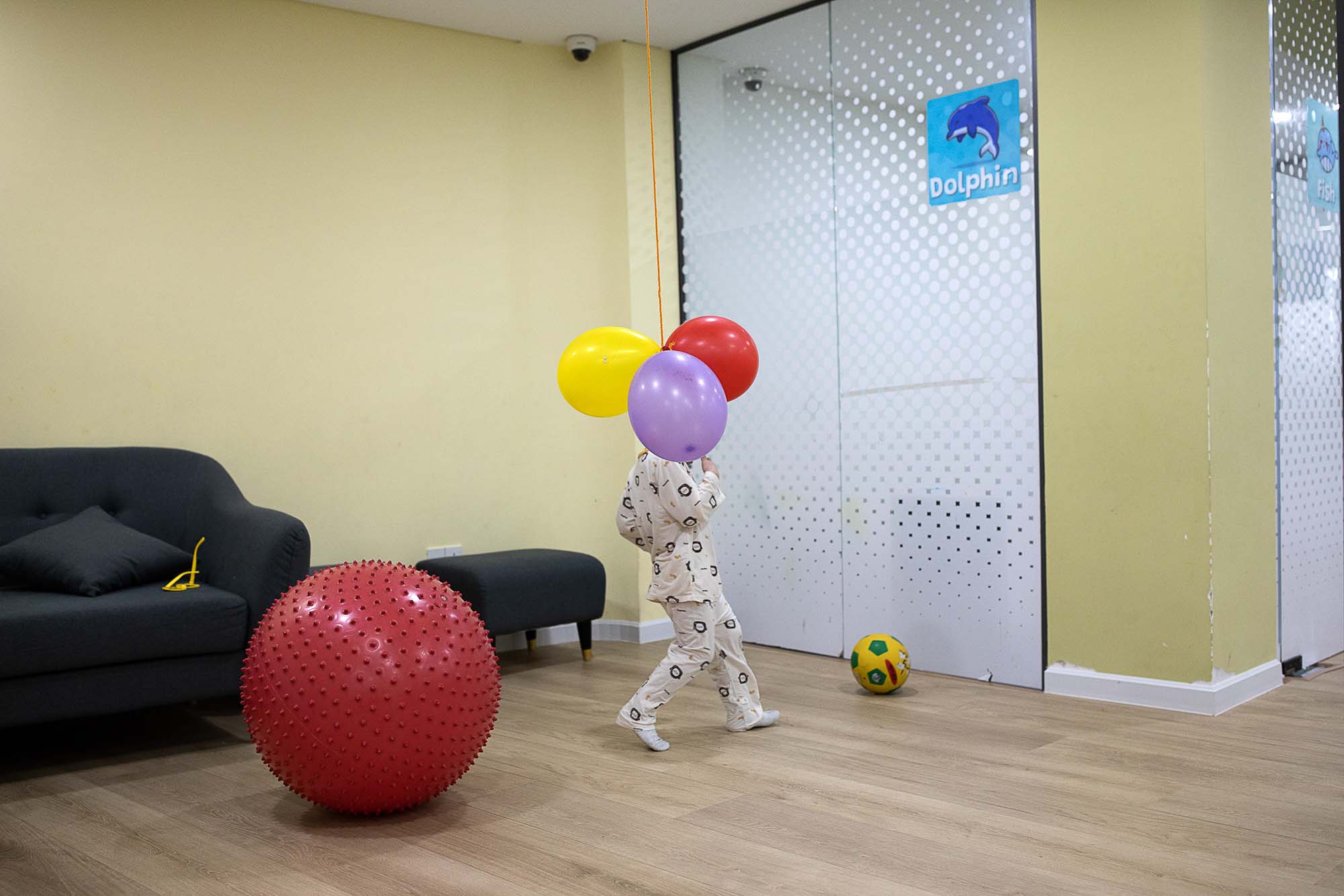
A child is playing in the classroom's library. Each child who performs well in school is rewarded with 15 minutes of free play time here by the teacher.
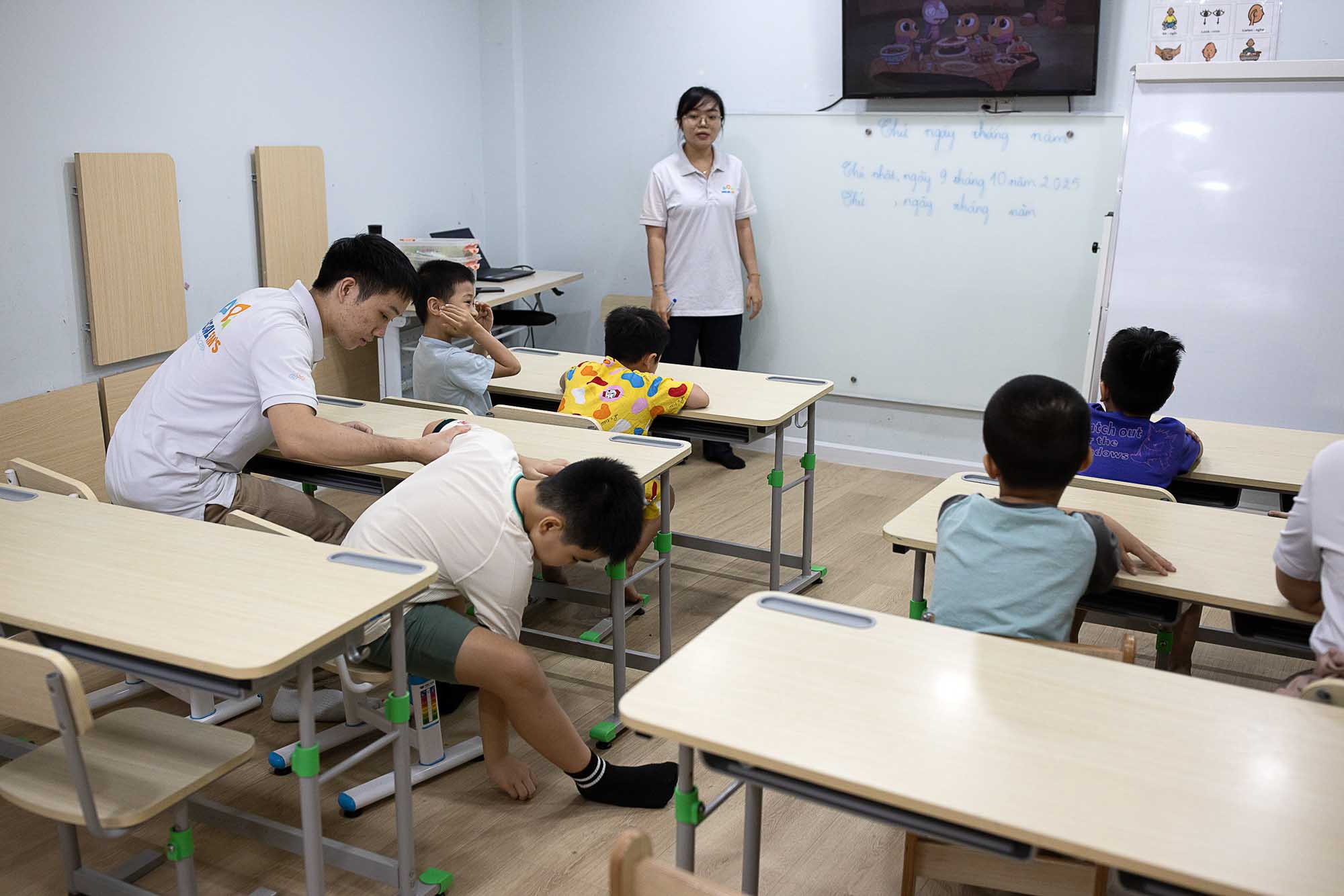
In some special cases, children will receive one-on-one attention from a teacher in a large classroom setting.
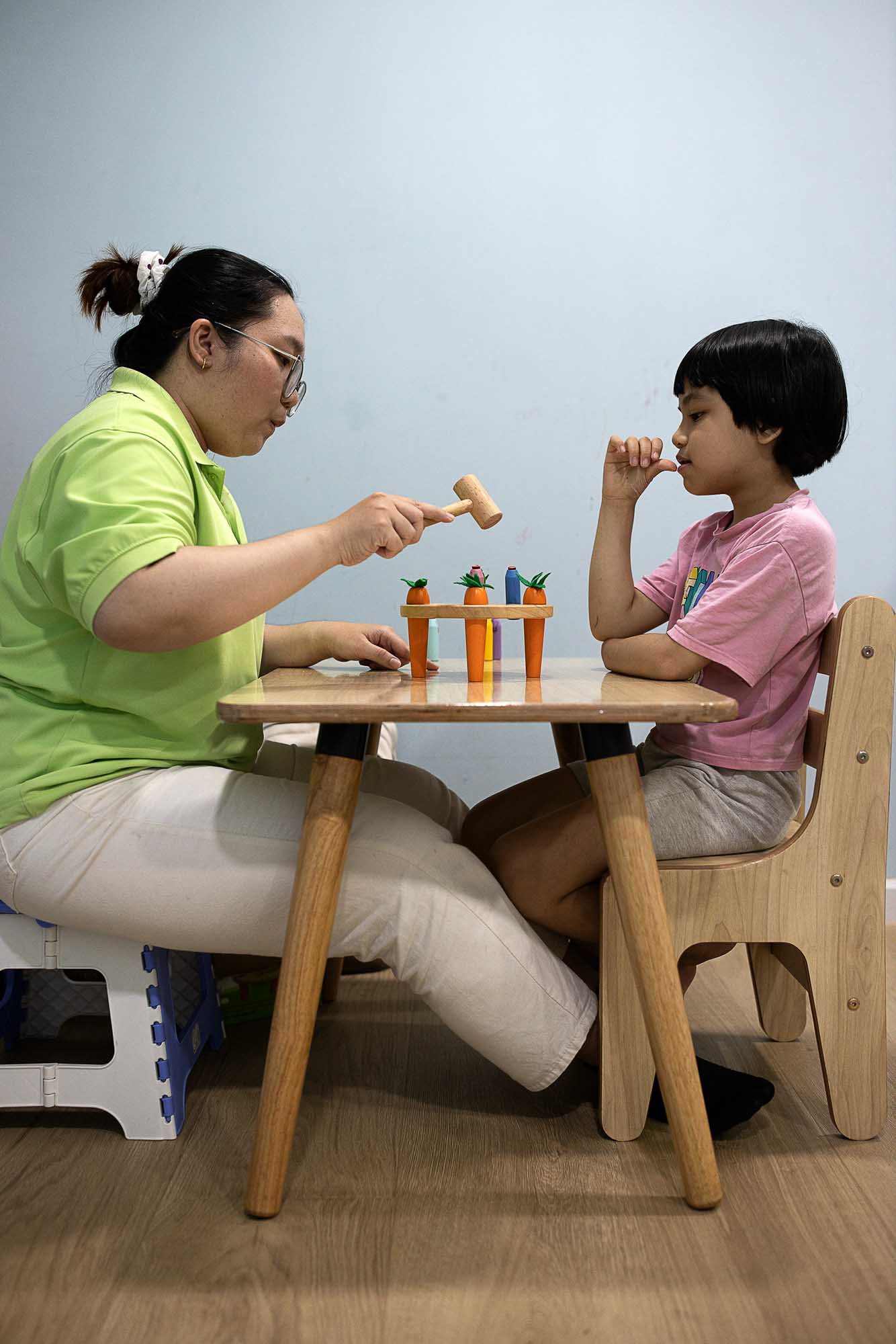
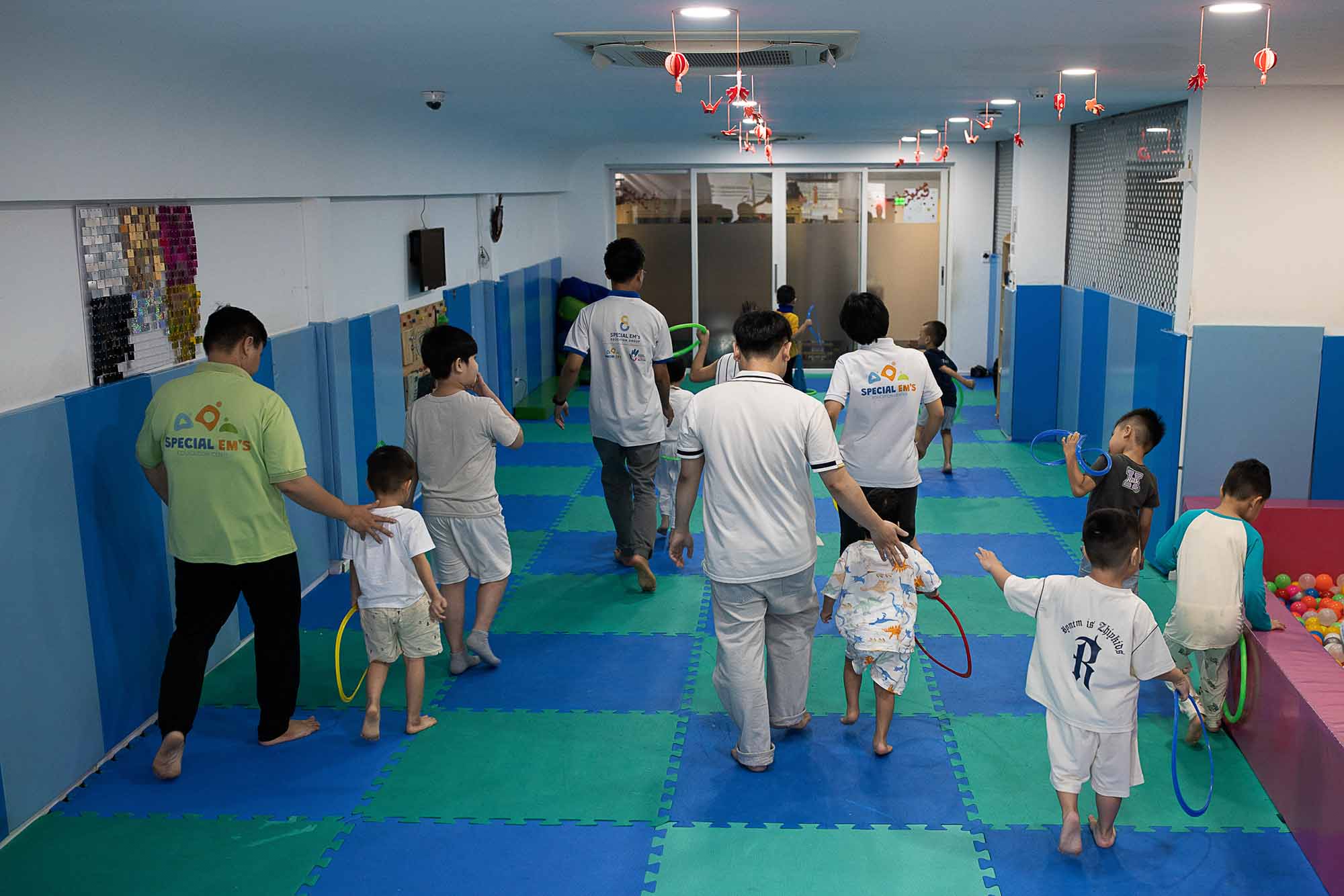
During a physical training session between teachers and children.
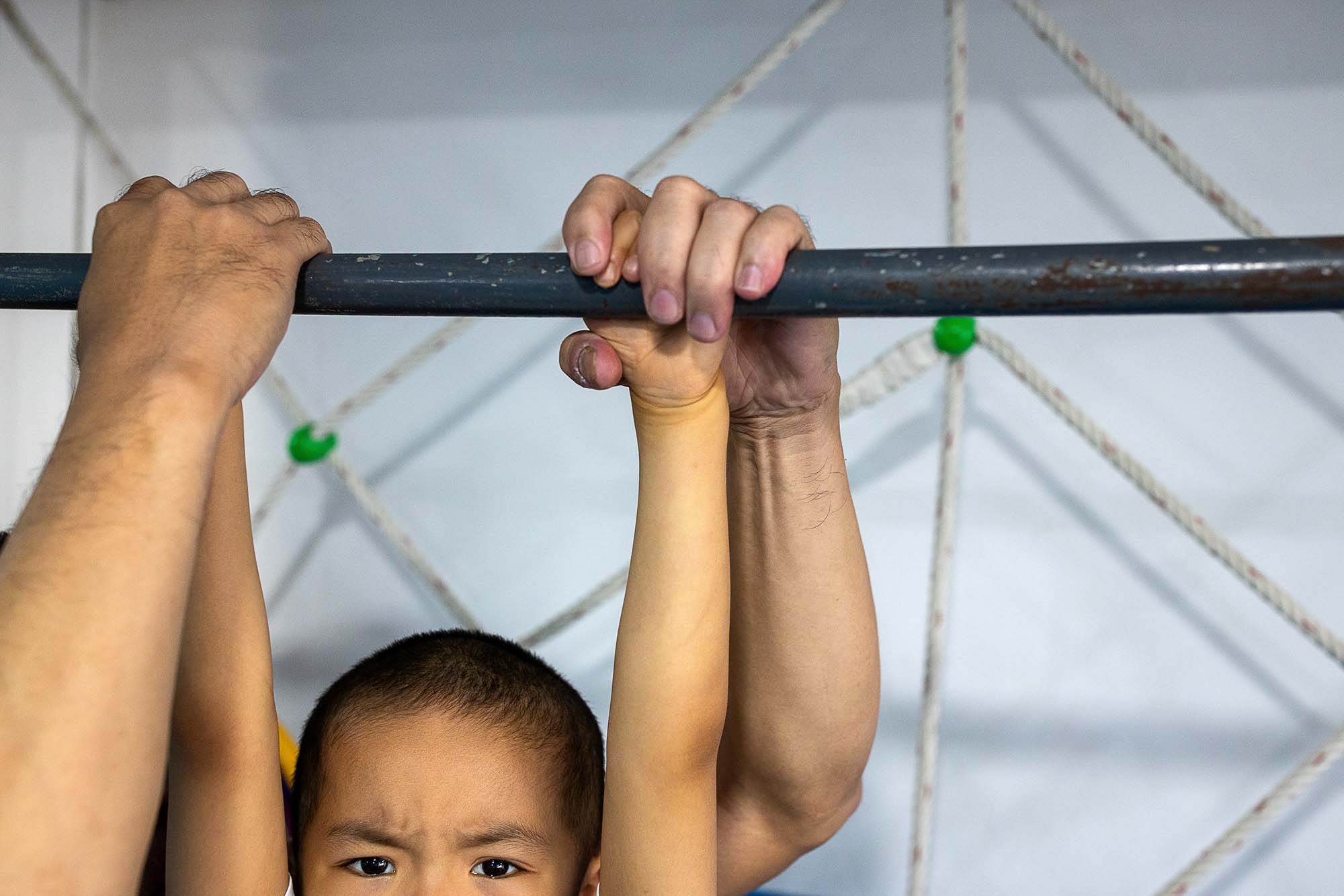
Specialized physical training exercises for children who have difficulty with proper walking and grasping objects.
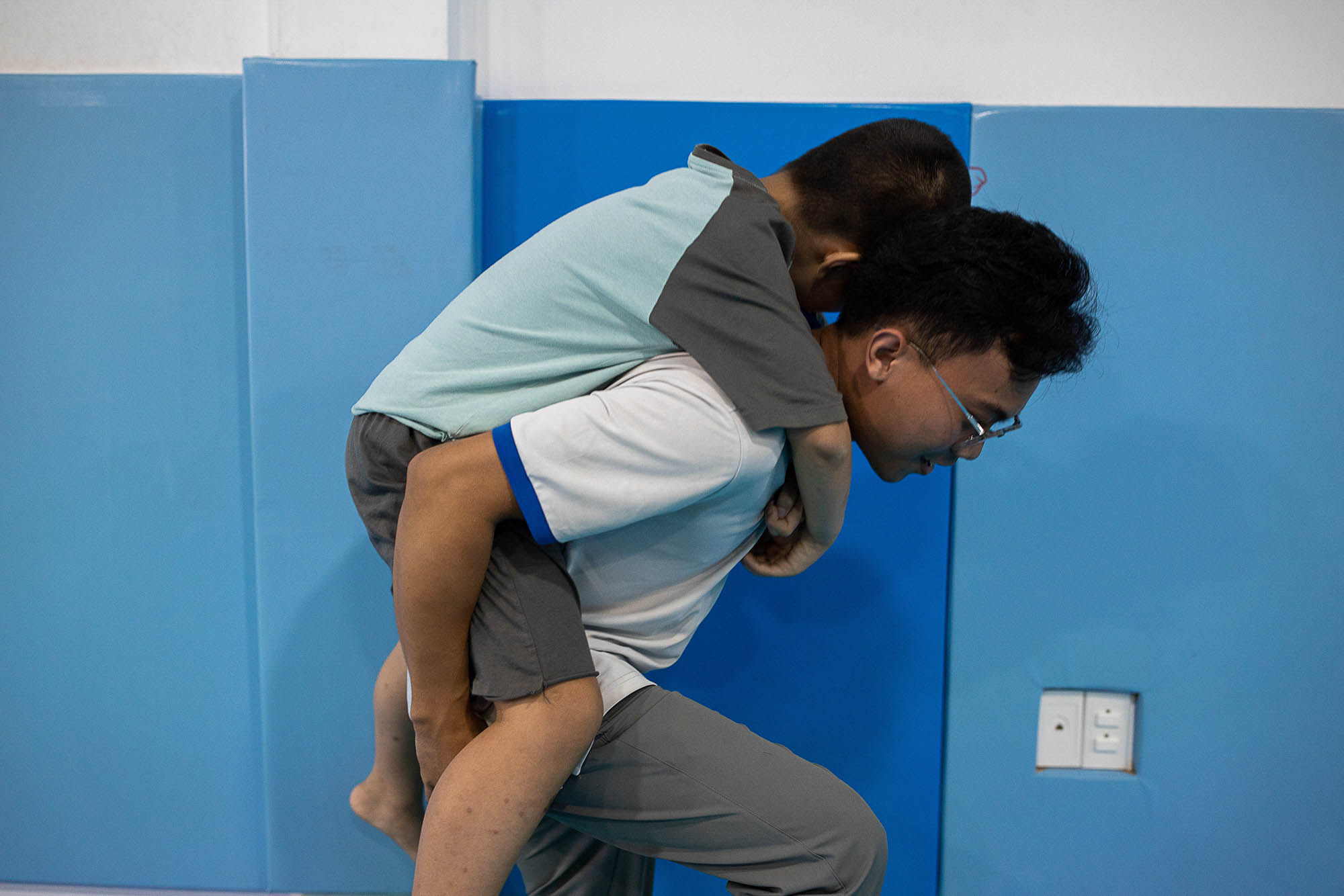
A young teacher is carrying a child on his back to encourage them during playtime.
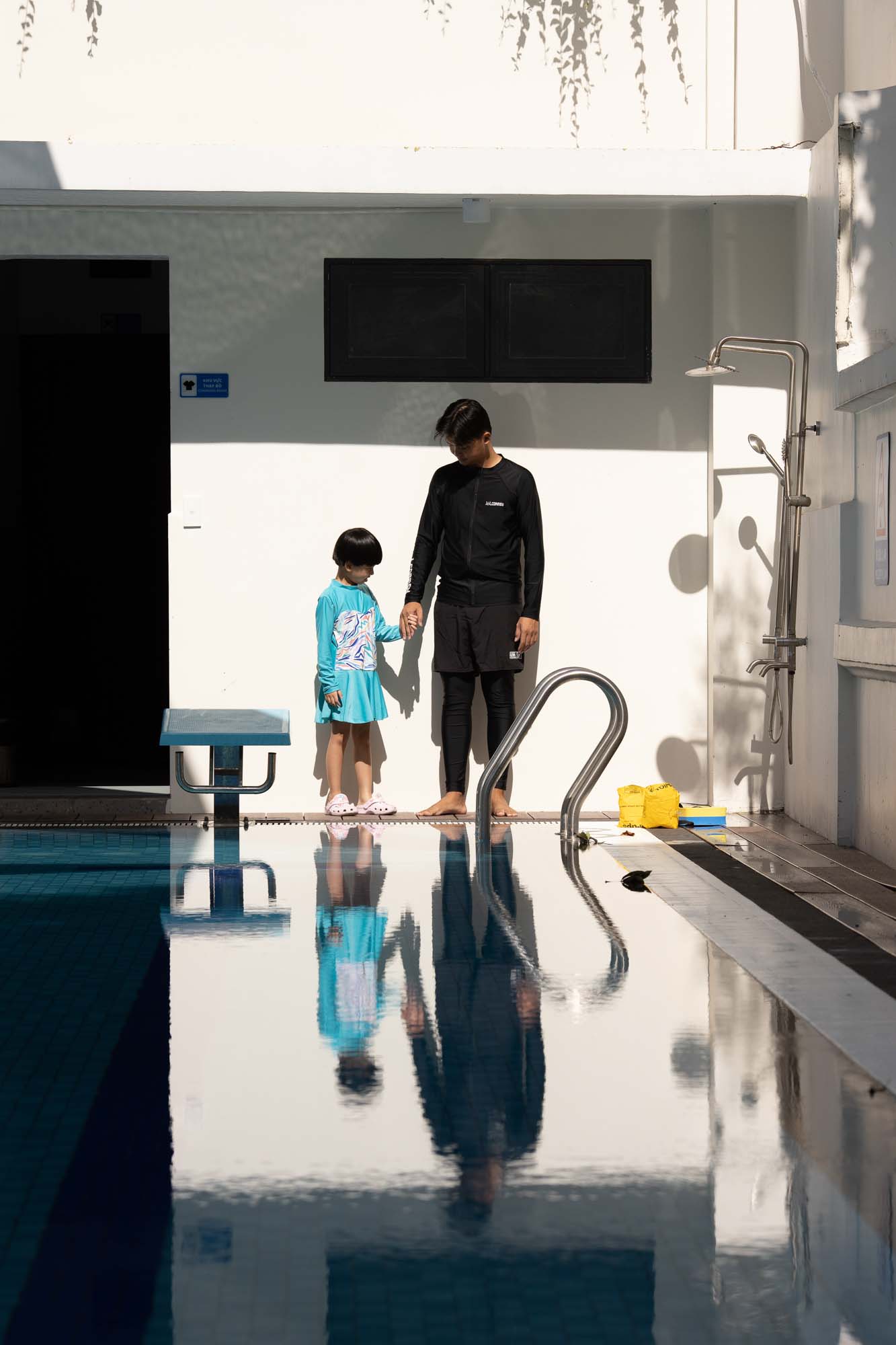
The teacher is encouraging 7-year-old An My to bravely approach the water before her outdoor swimming lesson.
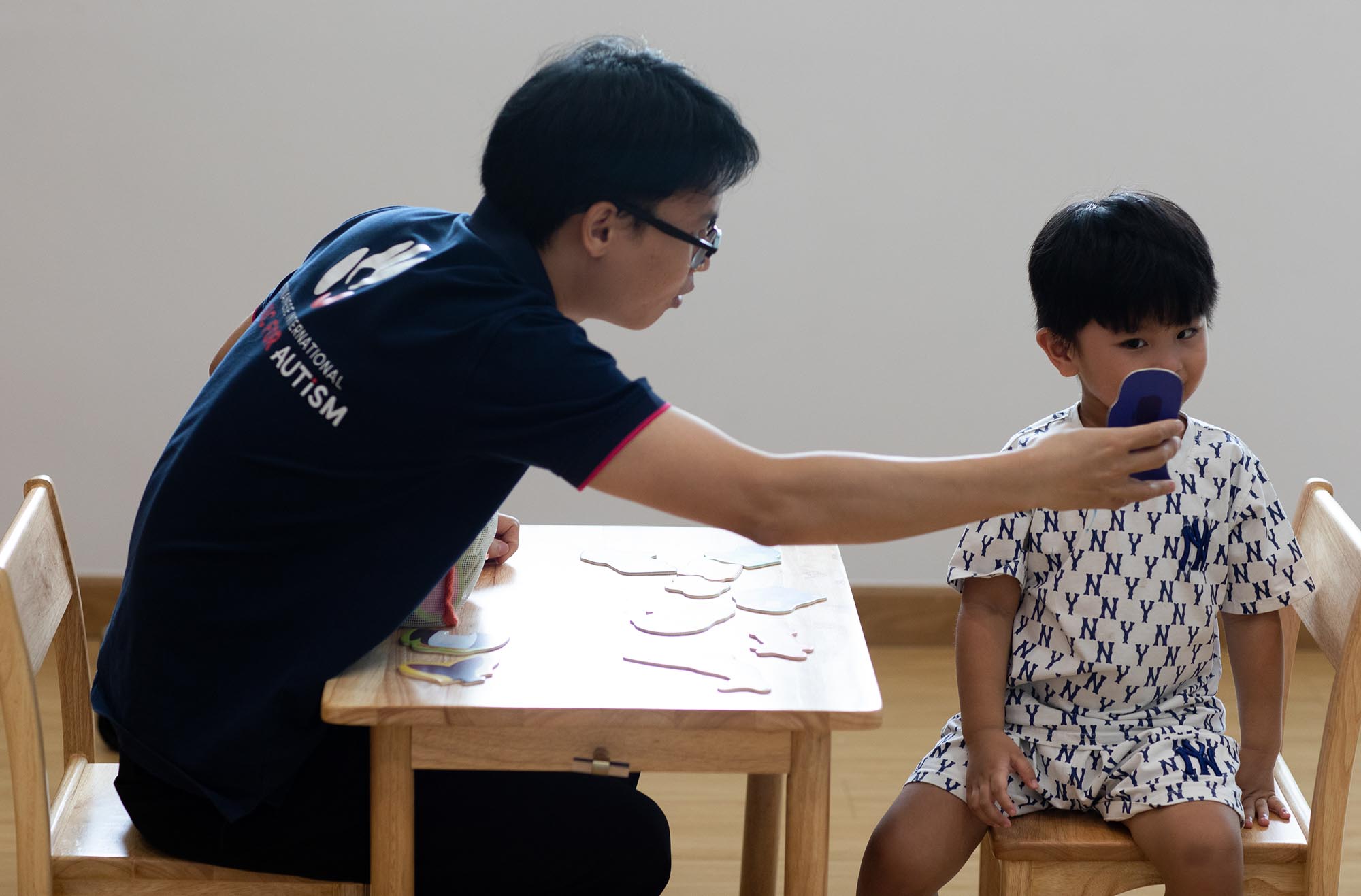
River, 3 years old, although shy about making eye contact, loves observing objects through numbers and reflections in mirrors.
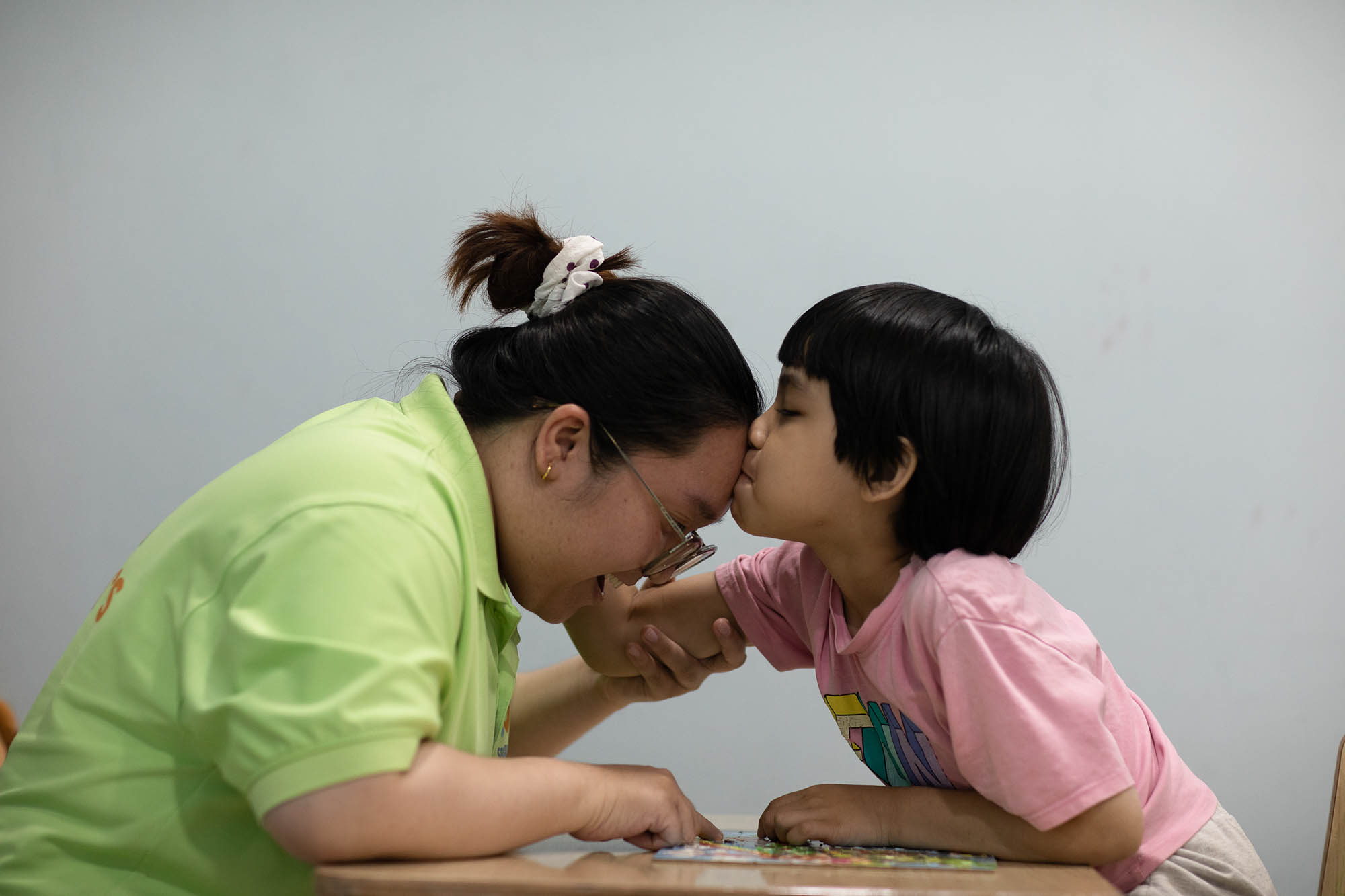
The teacher is feeling happy because her pupil know how to express their feelings to her during class.
A normal person has many ways to communicate easily, but for a child with “special needs,” contact with the outside world through physical touch is crucial, almost unique. This contact isn’t purely physical, it’s about the emotional connection between people, such as through eye contact.
Touch is a prominent behavior for children with autism spectrum disorder, as they experience it with a wide range of emotions and meanings. Due to differences in their sensory processing, even the slightest touch can trigger complex psychological responses. The need for communication through touch allows them to express strong emotions to the outside world, or simply to express their inner feelings in a highly intimate way. Through both direct and indirect physical contact, a special “language” is formed, which will guide those who support the children to find common ground on their long-term journey of companionship.
I had the opportunity to observe, to photograph some of the childrent’s activities during class time at a special school for autistic childrens. Looking back at the photos I took, I found it impossible to adequately describe the arduous journey of communication between teachers and students. The on-going photo story that I share here carries a metaphorical meaning, like a small sequence of images extracted from a long-term photo documentary project. While the ending is yet to be seen, there is hope and faith within them. It also serves as my expression of admiration for the dedicated teachers and courageous parents who persevere in supporting their children everyday in Vietnam.